
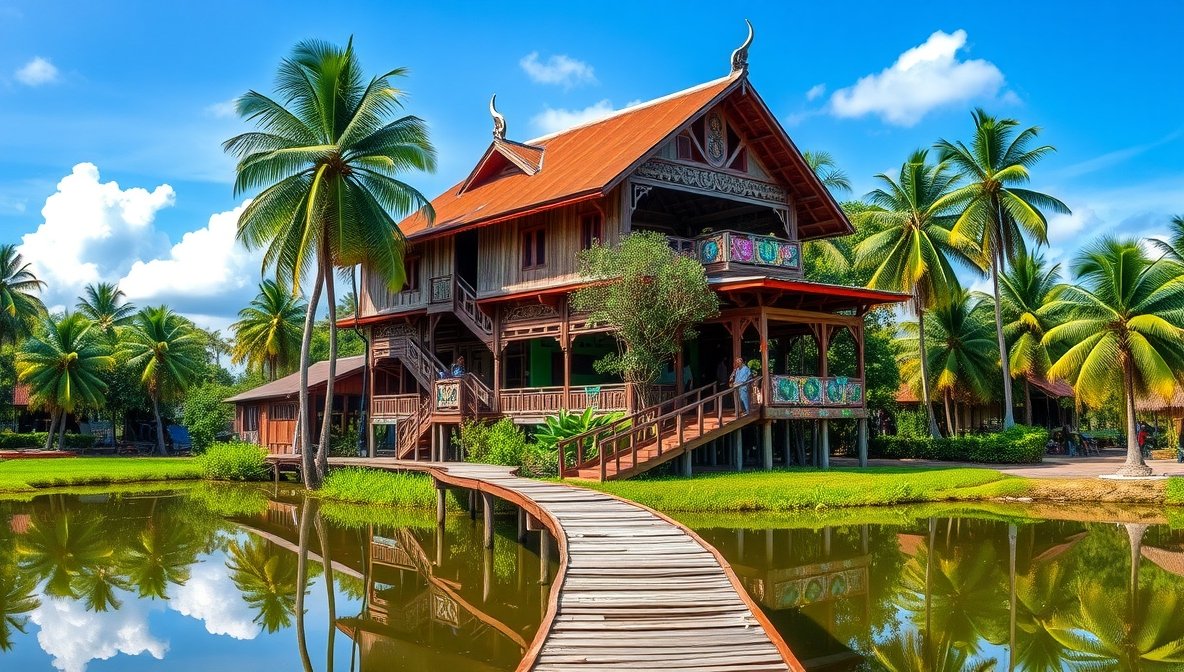
Southeast Asian Stilt House Architecture is one of the most remarkable examples of human adaptation to climate and environment. Built above ground on sturdy posts, these houses show how design can blend beauty, practicality, and culture. They protect families from floods, pests, and heat while reflecting local traditions and craftsmanship.
Modern architects now look to this ancient style for eco-friendly inspiration. Because stilt houses use natural materials and smart elevation techniques, they fit perfectly in today’s world of sustainable living. Understanding their history, design, and cultural role gives us a window into Southeast Asia’s architectural identity.
What Is Southeast Asian Stilt House Architecture?
Southeast Asian stilt house architecture refers to elevated wooden structures built on posts or stilts. Found in countries like Thailand, Vietnam, Indonesia, Malaysia, and the Philippines, these homes rise above water, soil, or grasslands. They are designed to handle tropical weather, including monsoons and flooding.
Traditional stilt houses use bamboo, timber, and palm leaves. These materials keep interiors cool while allowing air to flow beneath the structure. Over time, this building style evolved, but the essence of stilt architecture—protection, balance, and simplicity—remains strong.
Historical Roots of Stilt House Architecture
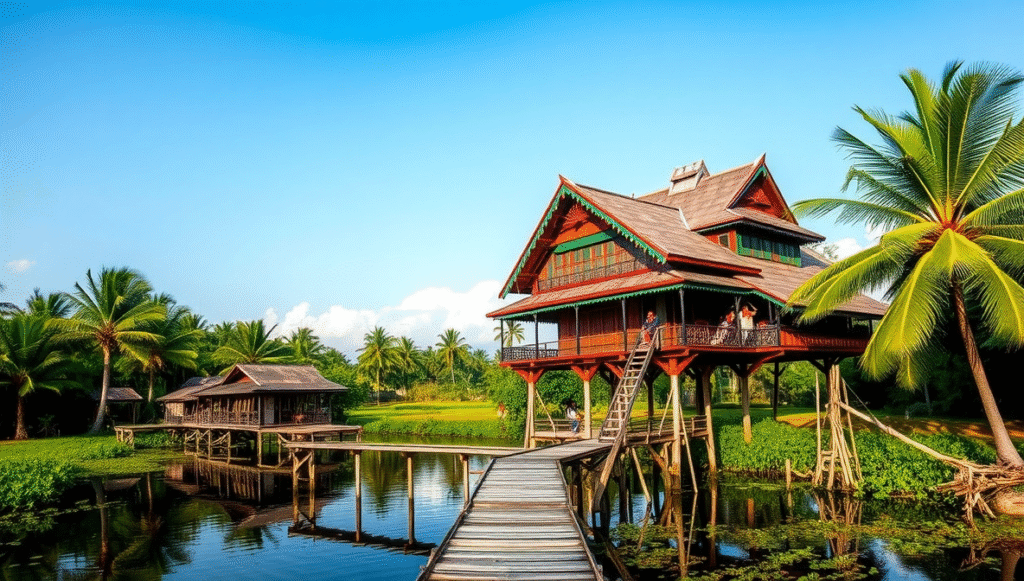
Centuries ago, communities across Southeast Asia began building stilt houses to survive their environment. Rising water during rainy seasons threatened homes, so elevating them became essential. In coastal regions, these houses also protected residents from high tides and insects.
Over time, stilt houses became a part of local identity. Each culture developed unique versions based on geography and materials. For example, Thai houses used tall stilts for river flooding, while Filipino bahay kubo designs balanced light bamboo walls with open-air ventilation.
Cultural Importance of Stilt Houses in Southeast Asia
Stilt houses hold deep cultural meaning. They represent harmony between humans and nature. Many Southeast Asian families believe living above ground connects them spiritually to both earth and sky. This belief adds symbolic strength to their architectural choice.
Community life often centers around stilt homes. Raised floors provide shade for workspaces, family gatherings, or animals. As a result, the design not only shelters people but also supports social interaction and tradition.
Environmental Benefits of Stilt House Architecture
Stilt houses naturally promote sustainability. Built with renewable materials like bamboo and wood, they require minimal industrial processing. Their raised design reduces flood damage and limits foundation erosion.
Additionally, air circulation beneath the house helps regulate temperature. This ventilation lowers energy use for cooling, making stilt homes environmentally efficient. Architects today recognize these ancient methods as early examples of green design.
Materials Used in Southeast Asian Stilt Houses
Traditional builders use what’s locally available. Common materials include bamboo for flexibility, hardwood for structure, and palm thatch for roofing. These natural resources create lightweight, durable houses that can stand through harsh climates.
Modern adaptations may use treated wood, metal stilts, or concrete bases. Yet even with new materials, the essence of stilt design—elevation, airflow, and simplicity—remains unchanged.
Architectural Features That Define Stilt Houses
Stilt houses share distinctive features. Raised platforms, slanted roofs, and open walls define their shape. The space beneath is often used for storage, animals, or as a cool resting spot.
In many regions, stairs lead up to the main floor, emphasizing safety and privacy. Roofs are steeply angled to allow rainwater to run off quickly. Every detail serves a functional purpose while enhancing comfort and resilience.
Modern Influence of Southeast Asian Stilt Architecture
Today, architects across the world adapt stilt house principles to modern needs. Elevated homes now appear in flood-prone urban areas and eco-resorts. Designers appreciate how this ancient concept provides solutions for sustainability and safety.
By blending traditional techniques with modern materials, builders create structures that respect culture and meet today’s challenges. This balance between past and future highlights the timeless wisdom of Southeast Asian design.
Regional Variations in Stilt House Styles
Each Southeast Asian country adds its own touch. In Vietnam, the nhà sàn features tall pillars and sloped roofs. In Indonesia, rumah panggung houses often include decorative carvings. Meanwhile, Malaysia’s rumah Melayu uses broad verandas for family gatherings.
These regional differences make stilt architecture diverse yet unified. Every version adapts to local weather, materials, and traditions while maintaining the shared philosophy of elevated living.
Why Stilt Houses Are Still Relevant Today
Climate change and rising sea levels make stilt houses increasingly important. They offer natural protection from floods and heat without relying heavily on modern technology. Their designs remind us that sustainable solutions often come from ancient wisdom.
Communities in coastal and tropical zones continue to rely on stilt homes for safety and comfort. Their continued use proves that tradition and innovation can coexist beautifully.
Building a Modern Stilt House: Key Design Tips
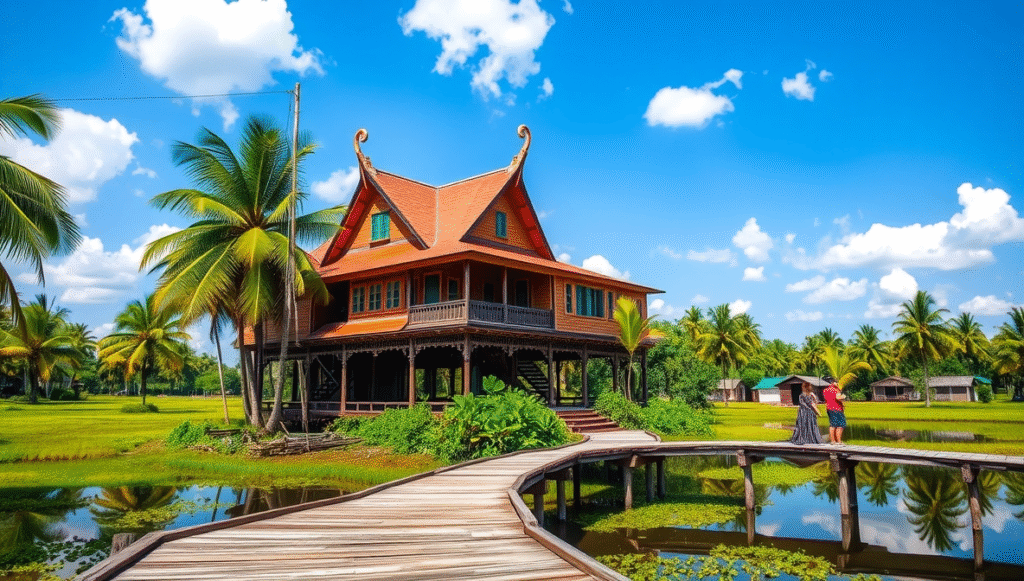
Anyone planning to build a modern stilt home should consider elevation height, material durability, and airflow. The structure should suit its environment, whether near water or in humid conditions.
Choosing sustainable materials like bamboo composites or treated timber improves longevity. Proper orientation ensures cool air circulation, while raised decks create outdoor living spaces that blend seamlessly with nature.
Preserving and Promoting Stilt House Heritage
Cultural preservation plays a major role in protecting stilt house architecture. Education, tourism, and restoration projects help younger generations appreciate its importance. Encouraging local artisans to continue traditional craftsmanship ensures that skills are not lost.
Governments and architects now collaborate to document and preserve these designs. Such efforts protect not only buildings but also the stories, beliefs, and lifestyles they represent.
Conclusion
Southeast Asian stilt house architecture stands as a symbol of resilience, intelligence, and respect for nature. By combining tradition with sustainability, these homes offer lessons for modern architecture.
If you’re planning an eco-friendly project or simply exploring cultural design, study the beauty of stilt houses. Their harmony between form and function continues to inspire across generations. Start your journey toward sustainable, elevated living today!
FAQ
1. Why are stilt houses built in Southeast Asia?
They are built to protect homes from floods, pests, and humidity while improving airflow and safety.
2. What materials are used in traditional stilt houses?
Bamboo, hardwood, palm leaves, and thatch are the most common materials used for construction.
3. How do stilt houses help with ventilation?
The raised design allows cool air to circulate beneath and through the structure, reducing indoor heat naturally.
4. Are stilt houses still built today?
Yes, many Southeast Asian regions continue building stilt homes, both traditionally and with modern updates.
5. Can stilt architecture be adapted for urban areas?
Absolutely. Architects are now using stilt designs in cities to combat flooding and promote sustainable housing solutions.