
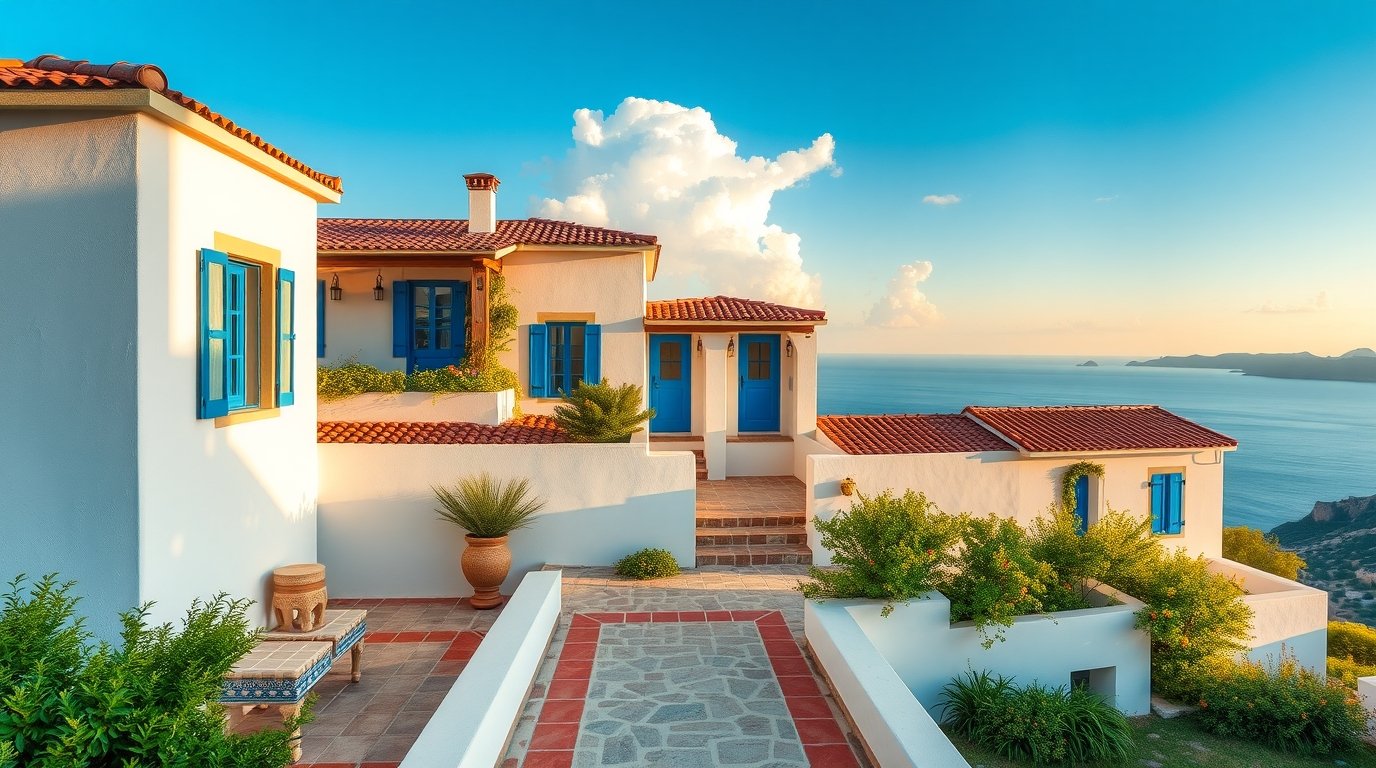
Mediterranean Villa Architecture in Greece is a masterpiece of harmony, simplicity, and elegance. With its sun-kissed walls, blue accents, and stone pathways, this architectural style captures the spirit of coastal living. Rooted in centuries of tradition, it reflects a perfect balance between nature and human craftsmanship. Today, many homeowners and architects are rediscovering this design to create homes that feel both luxurious and peaceful.
The Essence of Mediterranean Villa Architecture in Greece
Mediterranean villa architecture in Greece blends history, culture, and artistry. It draws inspiration from ancient Greek, Roman, and Moorish influences. Characterized by whitewashed walls, arched windows, and terracotta roofs, these villas radiate warmth. The design focuses on natural light and open-air living, creating an inviting atmosphere.
Additionally, every element serves a purpose. The thick stone walls keep homes cool in summer and warm in winter. Courtyards filled with olive trees and bougainvillea add natural beauty. As a result, this style combines comfort, charm, and functionality seamlessly.
Key Architectural Elements of Greek Mediterranean Villas
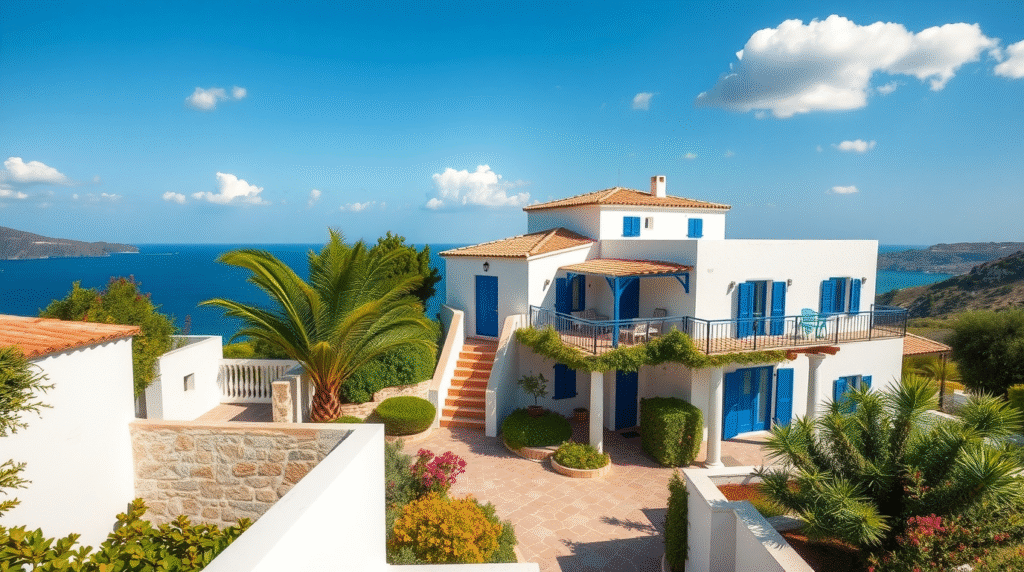
Greek Mediterranean villas are known for their distinctive design elements. Arched doorways, exposed wooden beams, and red clay tiles define their look. Balconies and terraces offer panoramic sea views. These features highlight the strong connection between architecture and nature.
Furthermore, materials such as limestone, marble, and stucco give each villa a unique texture. Handcrafted iron details and mosaic floors add artistic value. Every component tells a story of timeless Greek craftsmanship.
Color Palette and Aesthetic Harmony
The color palette of Mediterranean villa architecture in Greece mirrors the surrounding landscape. Shades of white, blue, beige, and terracotta dominate. White walls reflect sunlight, while blue accents symbolize the sea and sky. Together, they create a soothing visual balance.
Moreover, the use of natural pigments enhances authenticity. Wooden shutters, clay pots, and stone pathways add warmth. This harmony between tones makes Greek villas truly unforgettable.
Interior Design of Mediterranean Villas in Greece
Interiors reflect simplicity and elegance. Open spaces, high ceilings, and minimal clutter define the style. Natural materials like wood and stone add texture and warmth. Every room feels airy, with sunlight streaming through large windows.
Besides aesthetics, functionality remains essential. Built-in furniture, soft fabrics, and neutral tones make living spaces comfortable. The design promotes relaxation, perfectly matching the Mediterranean lifestyle.
Outdoor Spaces and Courtyard Charm
Outdoor living is the heart of Mediterranean villa architecture in Greece. Courtyards, patios, and verandas connect the home to nature. Stone walkways lead to cozy seating areas surrounded by olive trees and fragrant herbs.
In addition, shaded pergolas offer a cool retreat during sunny days. Terraces often feature sea views, creating a serene escape. These spaces encourage social gatherings and relaxation, blending seamlessly with the interior.
Sustainable Features in Modern Greek Mediterranean Villas
Sustainability plays a growing role in contemporary villa design. Builders use eco-friendly materials like local stone, clay, and reclaimed wood. Solar panels and rainwater systems improve energy efficiency.
Likewise, natural ventilation reduces the need for air conditioning. Green roofs and gardens promote biodiversity. Combining tradition with modern technology helps preserve both heritage and the environment.
Cultural Influence on Mediterranean Architecture in Greece
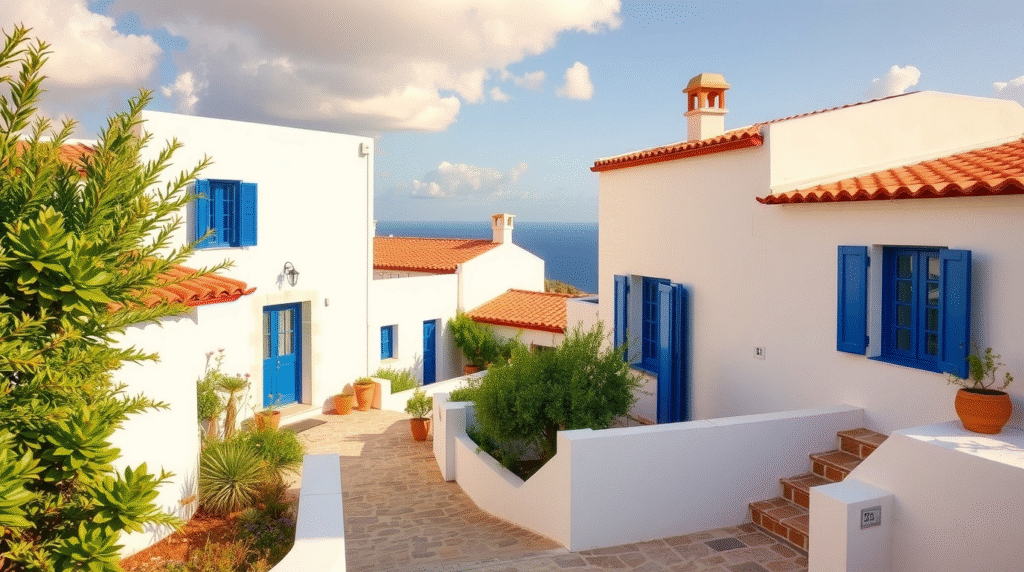
Greek culture deeply influences Mediterranean villa architecture. Ancient temples, monasteries, and village houses inspire modern designs. The concept of philoxenia—Greek hospitality—is reflected in the open layouts and welcoming courtyards.
Additionally, art and mythology inspire decorative motifs. Sculptures, frescoes, and mosaics celebrate Greek history. This blend of past and present creates architecture that feels both timeless and alive.
Regional Variations Across Greek Islands
Each Greek island showcases unique interpretations of Mediterranean villa architecture. In Santorini, white cube-shaped homes with blue domes dominate the cliffs. In Crete, villas feature rustic stone exteriors and wooden balconies.
Moreover, islands like Mykonos favor minimalism, while Rhodes embraces historical charm. These regional differences reflect local materials, climate, and culture, enriching Greece’s architectural diversity.
Lighting and Ambience in Mediterranean Villas
Lighting plays a vital role in enhancing the beauty of Greek villas. Natural light floods rooms through large windows and open courtyards. At night, soft lanterns and candlelight create a warm, romantic glow.
Furthermore, light fixtures often feature wrought iron or ceramic details. This thoughtful illumination emphasizes textures, colors, and architectural depth. As a result, homes feel both vibrant and peaceful.
Modern Adaptations of Traditional Greek Mediterranean Style
Modern architects reinterpret Mediterranean villa architecture in Greece with contemporary touches. Clean lines, glass facades, and smart home technology meet classic forms. This fusion creates spaces that are luxurious yet respectful of tradition.
At the same time, open-plan living areas encourage fluidity between indoor and outdoor spaces. These updates make the architecture appealing to today’s global homeowners seeking elegance and comfort.
Designing Your Own Mediterranean Villa in Greece
Building a Mediterranean villa in Greece starts with understanding the environment. Choosing natural materials and sustainable layouts ensures harmony with nature. Focusing on light, texture, and proportion helps capture authentic charm.
Next, landscaping enhances the experience. Olive trees, lavender bushes, and stone fountains enrich outdoor spaces. Whether building a new home or renovating, thoughtful design brings timeless Mediterranean beauty to life.
Conclusion:
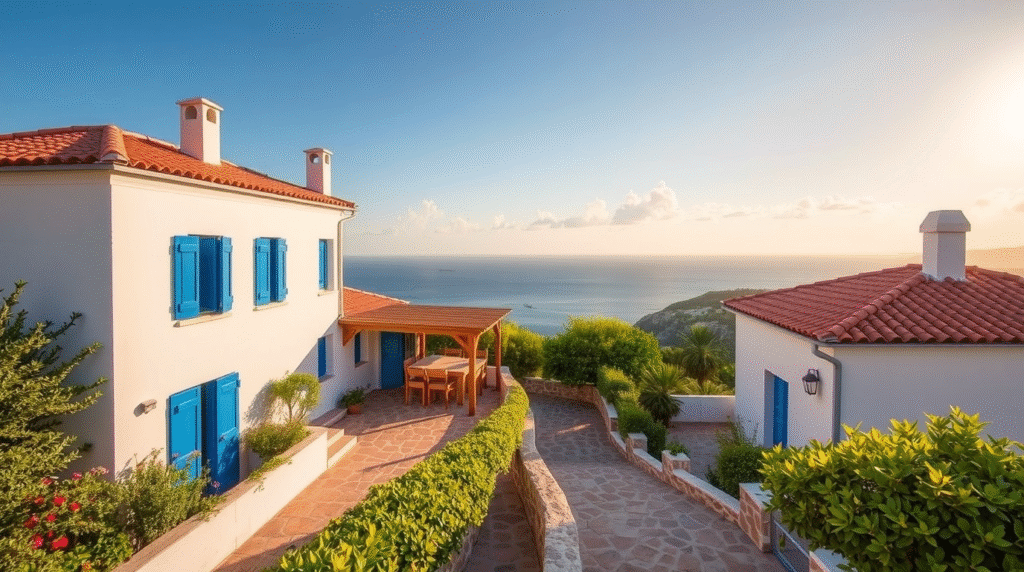
Mediterranean villa architecture in Greece remains a symbol of harmony, simplicity, and grace. Its natural beauty and sustainable principles make it an ideal choice for modern living. Whether in the islands or mainland, these homes offer comfort, style, and soul.
Ready to create your dream Mediterranean villa? Start designing with nature’s beauty and Greece’s timeless spirit as your guide.
FAQs
1. What makes Mediterranean villa architecture in Greece unique?
It combines natural materials, open spaces, and a seamless connection between indoor and outdoor living.
2. Which materials are commonly used in Greek Mediterranean villas?
Limestone, marble, stucco, clay tiles, and wood are often used for both durability and beauty.
3. How do Greek villas stay cool during hot summers?
Thick stone walls, shaded courtyards, and natural ventilation help regulate indoor temperatures.
4. Are modern Greek villas still built in the traditional style?
Yes, many modern villas retain classic elements while integrating sustainable and smart technologies.
5. Can I design a Mediterranean-style home outside Greece?
Absolutely. By using similar materials, colors, and design principles, you can recreate the Greek Mediterranean charm anywhere.