
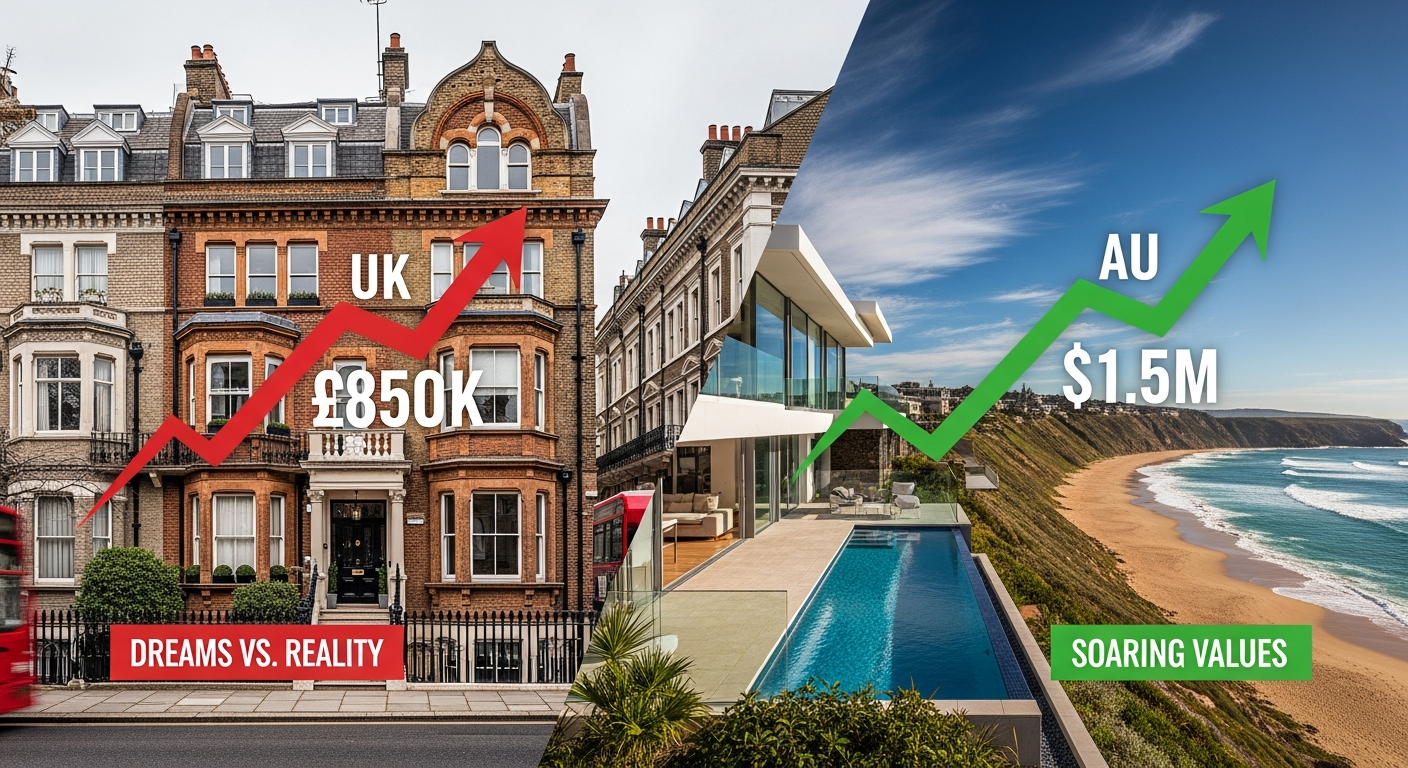
Dive into the fierce battle of soaring property values where dreams clash with reality. Expensive House Market UK vs Australia The expensive house market UK vs Australia captivates buyers worldwide. Prices skyrocket, yet opportunities abound. Discover which nation demands more from your wallet. Uncover truths that shape your next move. This comparison reveals stark differences and surprising similarities.
Overview of the UK Housing Market
London leads the pack in the expensive house market UK vs Australia. Average house prices exceed £500,000 in the capital. Buyers flock to vibrant neighborhoods like Kensington and Chelsea. However, regional areas offer more affordable options. Demand surges due to urban appeal. Consequently, competition intensifies daily.
Cambridge follows closely with prices around £472,500. Oxford boasts £452,700 on average. These university cities attract professionals and families alike. Moreover, Bristol reaches £342,600, blending culture and convenience. Buyers seek quality education and job prospects. Thus, these factors fuel price hikes.
Brighton ranks high with £420,181 properties. Edinburgh joins the list for Scottish flair. Additionally, Manchester provides urban living at competitive rates. Investors eye these spots for growth potential. Therefore, the market remains dynamic and appealing.
Rental costs mirror ownership trends. London renters pay over £2,200 monthly. Oxford demands £1,561, while Cambridge asks £1,533. Furthermore, St Albans and Brighton exceed £1,500. Tenants face tough choices. So, many opt for suburbs to save.
Overview of the Australian Housing Market
Sydney dominates the expensive house market UK vs Australia. Median house values approach $1.4 million. Waterfront properties command premiums. However, Melbourne offers slightly lower at high levels. Buyers chase sunny lifestyles and beaches. As a result, demand never wanes.
Brisbane overtakes Canberra as second priciest. Prices rise by nearly $40,000 recently. Adelaide ranks sixth globally for unaffordability. Moreover, Perth and Canberra follow suit. Urban migration boosts these figures. Thus, cities buzz with activity.
Four Australian cities surpass New York and London in expense. Sydney holds second most unaffordable spot. Melbourne and Adelaide enter top ten. Additionally, Brisbane and Perth rank in top twenty. Homebuyers struggle with ratios. Therefore, affordability crises loom large.
Rental markets reflect ownership woes. Sydney tops with high weekly rents. Melbourne follows at $570. Furthermore, Brisbane demands $620. Adelaide and Perth hover around $590-$650. Tenants seek bargains in outskirts. So, regional shifts gain traction.
Key Price Comparisons in Expensive House Market UK vs Australia
Australian properties cost 25.7% more on average than UK ones. Expect 20-30% higher housing expenses down under. However, some sources note UK regional prices exceed Australian counterparts. Buyers compare carefully. Consequently, decisions hinge on specifics.
Median price-to-income multiple reveals stark gaps. Australia hits 9.7x, while UK stands at 5.0x. This makes Australian homes twice as expensive relative to earnings. Moreover, US compares at 4.8x. Investors note these ratios. Thus, affordability varies greatly.
Sydney’s median house price towers at 15 times household income. UK averages hover lower. Additionally, Australian cities like Melbourne classify as impossibly unaffordable. UK spots like London face similar but lesser pressures. Therefore, buyers weigh options thoroughly.
Rental comparisons show London at £2,264 monthly. Sydney equivalents push higher in AUD terms. Furthermore, overall living costs in Australia exceed UK by 10-25%. Tenants budget accordingly. So, relocations demand financial planning.
Factors Driving High Prices in the UK
Supply and demand clash fiercely in the UK. Limited new builds fail to meet growing needs. Location plays a pivotal role. Prime spots like London attract global buyers. Moreover, economic stability boosts confidence. As a result, prices climb steadily.
Government policies influence markets. Stamp duty changes affect transactions. Interest rates sway mortgage affordability. Additionally, population growth adds pressure. Families seek space amid rising incomes. Therefore, competition escalates quickly.
Property size and condition matter greatly. Larger homes command premiums. Age impacts value too. Furthermore, infrastructure developments enhance appeal. Buyers prioritize connectivity. So, investments in transport lift neighborhoods.
Speculative buying fuels rises. Investors flip properties for profit. However, regulations curb excesses. Credit availability eases purchases. Thus, banks play key roles in dynamics.
Factors Driving High Prices in Australia
Population growth drives Australian prices upward. Migrants flock to cities like Sydney. Supply shortages exacerbate issues. Moreover, low interest rates encourage borrowing. Buyers seize opportunities. Consequently, auctions heat up.
Tax incentives favor investors. Negative gearing reduces costs. Capital gains discounts attract funds. Additionally, banking deregulation expands credit. Homeowners leverage equity. Therefore, bubbles form occasionally.
Immigration contributes but not primarily. Foreign buyers add marginal impact. Furthermore, planning laws restrict developments. Urban sprawl faces limits. So, inner-city demand surges.
Economic factors like job markets bolster prices. Strong employment in tech and finance sectors. Thus, affluent buyers push boundaries.
Future Trends in Expensive House Market UK vs Australia
Technology reshapes markets. Virtual tours streamline viewings. AI predicts price shifts. Moreover, sustainability gains traction. Eco-friendly homes fetch premiums. Buyers demand green features. As a result, builders adapt swiftly.
Remote work alters preferences. Suburbs gain popularity over cities. Additionally, aging populations seek downsizing options. Markets evolve accordingly. Therefore, flexibility becomes key.
Policy changes loom large. Governments target affordability. Housing targets increase builds. Furthermore, interest rate hikes cool overheating. Investors monitor closely. So, stability may return.
Global events influence trends. Economic shifts affect migration. Thus, adaptability defines success.
Conclusion
The expensive house market UK vs Australia presents unique challenges and chances. Australia often edges out in costs, yet UK offers diverse options. Buyers must research deeply. Weigh factors like income ratios and locations. Make informed choices now. Consult real estate experts today to secure your dream home before prices soar further.
FAQs
What makes Sydney more expensive than London in the house market?
Sydney’s waterfront appeal and limited supply drive prices higher. Moreover, strong local economy boosts demand. However, London’s global status keeps it competitive.
How do income levels affect housing affordability in UK vs Australia?
Australian price-to-income ratios double UK’s. Consequently, UK buyers find homes more accessible relative to earnings. Additionally, wage growth varies between nations.
Which factors most influence UK house prices?
Supply shortages and prime locations top the list. Furthermore, economic policies play crucial roles. Thus, buyers monitor these closely.
Are Australian regional areas more affordable than urban ones?
Yes, regions offer better value. However, cities like Sydney command premiums. So, relocation can save significantly.
What future changes might ease expensive house markets?
Increased building targets and rate adjustments could help. Moreover, sustainable developments attract buyers. Therefore, markets may balance out.