
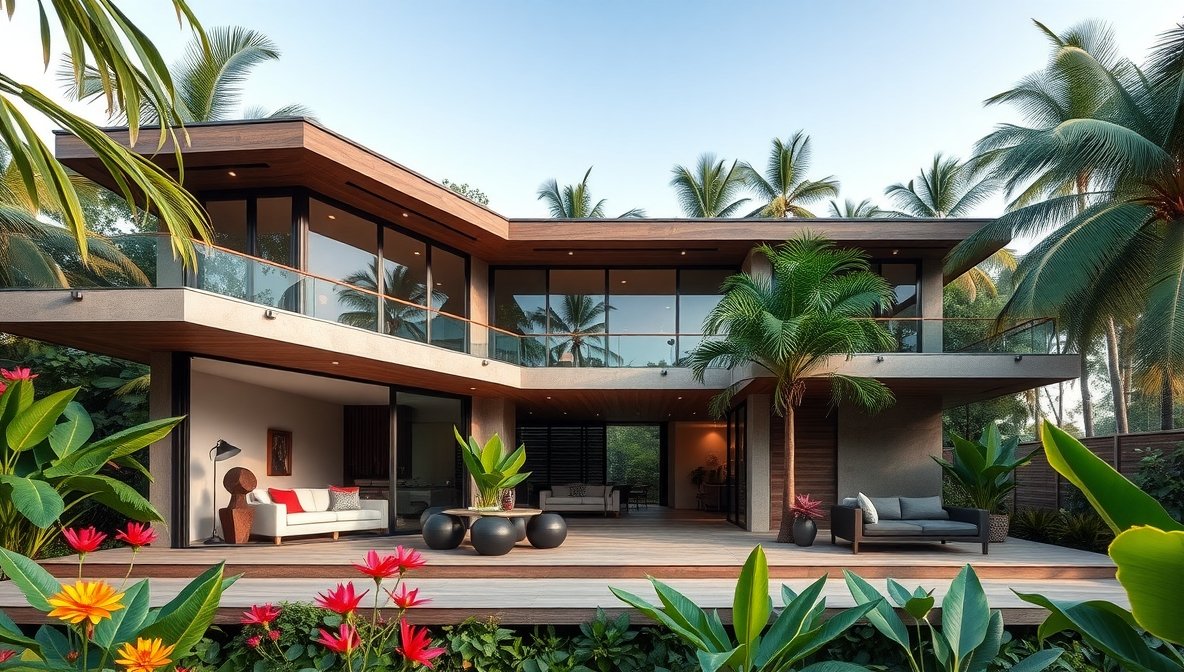
When you imagine a dream home in Brazil, you might picture lush greenery, captivating sunlight, sleek architecture, and open indoor-outdoor spaces. The phrase Brazilian Tropical Modern House Design captures exactly this: homes that merge contemporary lines with the vibrancy of tropical nature. In this article, we’ll explore how such houses are planned, what features they include, and how you can bring that style into your own property. Let’s dive in.
What is Brazilian Tropical Modern House Design?
Brazilian tropical modern house design blends modern architecture with the climate, materials, and life of tropical Brazil. It prioritizes clean lines, open layouts, and a strong connection with nature. Contemporary Brazilian homes focus on ventilation, panoramic views, and local materials that suit the tropical climate.
These homes typically integrate greenery, natural light, and outdoor spaces so that the boundary between inside and outside becomes soft and inviting.
Key Characteristics of the Style
1. Seamless Indoor-Outdoor Flow
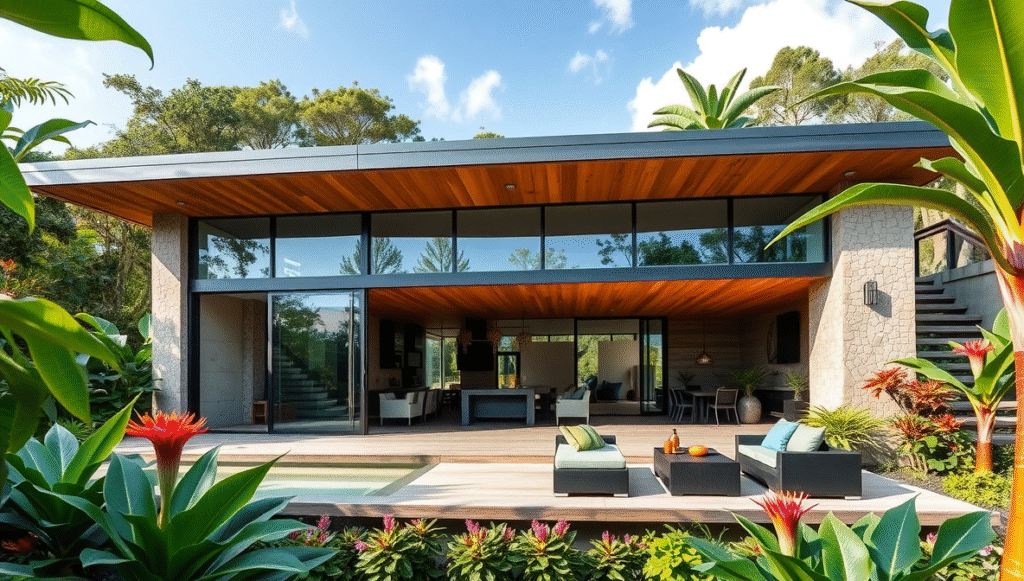
In Brazilian tropical modern house design, the indoor and outdoor areas often blend into one. Large sliding glass walls, verandas, terraces, and gardens are common. This continuous flow helps manage tropical heat by letting air circulate and by creating shaded transitional spaces.
2. Natural and Local Materials
Materials matter a lot. In tropical climates, wood, stone, concrete, and native timber are widely used. The choice of local materials helps anchor the home in its environment, provides authenticity, and often improves sustainability. The goal is to blend structure with surroundings naturally.
3. Ventilation, Light & Shade
Good design in tropical settings must address heat, humidity, and heavy rain. Homes adopt deep roof overhangs, louvers, shaded terraces, and large openings to capture breezes and reduce heat gain. Natural light is abundant, but it must be controlled so interiors stay comfortable. Careful orientation and shading devices make this possible.
4. Connection to Landscape
A hallmark of this style is that the house feels part of the site rather than simply placed on it. Trees, native plants, and water features often surround or flow through the design. This connection adds to the sense of calm, privacy, and integration with nature.
Planning Your Brazilian Tropical Modern House Design
Site & Orientation
First, analyze your site carefully. Consider sun path, prevailing winds, views, and vegetation. In a tropical climate, you want to capture breezes and avoid harsh midday sun. Place living spaces where outdoor access and views are strongest while keeping bedrooms shaded and private.
Layout & Zoning
Design open living spaces that flow out to terraces or gardens. Use large glass-wall systems to open up views and blur boundaries. Bedrooms may be positioned higher or slightly separated from main zones for privacy. A well-zoned layout supports both openness and comfort.
Material & Finishes
Choose woods, stones, and concrete that complement the surroundings and perform well in humidity. Consider finishes that are easy to maintain in a tropical environment. Use overhangs, shading devices, and ventilated facades to protect materials from direct weather exposure.
Landscaping & Water Features
Incorporate native tropical plants, palms, shrubs, and water elements such as pools or ponds. Landscaping acts as a climate moderator and visual enhancer. Green courtyards or gardens inside the home footprint help bring nature indoors.
Sustainable & Climate Adaptation Elements
Passive design is essential. Use roof overhangs, cross-ventilation, solar orientation, rain-protection features, and natural cooling systems. Add sustainable features like rain-water harvesting, solar panels, and efficient insulation to align with modern tropical design principles.
Design Elements to Include
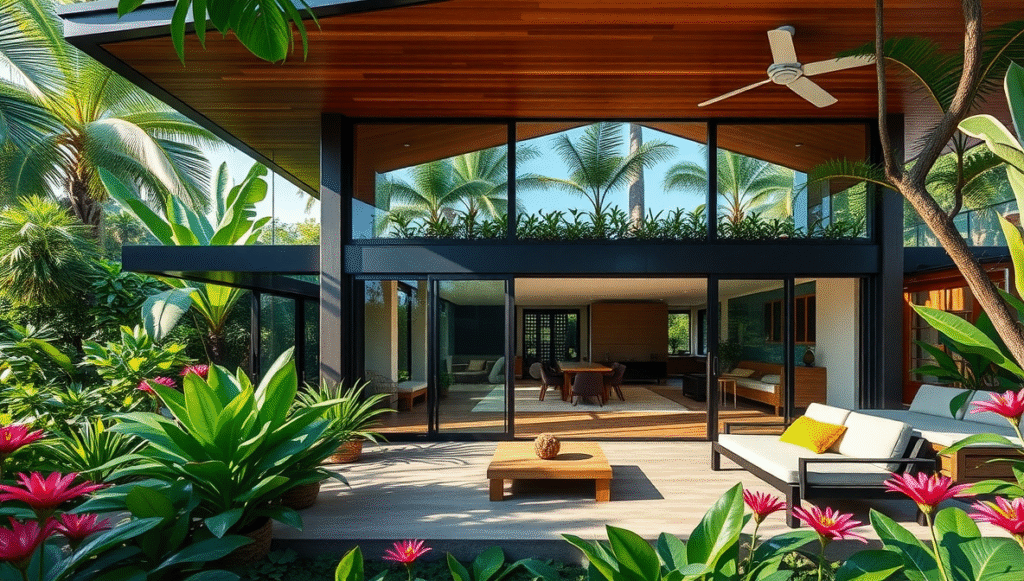
- Large Sliding Glass Doors to connect living areas to outdoor terraces.
- Deep Overhangs & Shading Louvers to control sunlight while allowing airflow.
- Material Contrast between concrete, wood, and stone for texture and balance.
- Indoor Gardens or Courtyards to bring greenery into the home.
- Water Features or Pools to mirror outdoor surroundings and enhance cooling.
- Roof Terraces or Decks for extended outdoor living.
- Ventilation-Friendly Roof Systems to reduce indoor heat naturally.
Why Choose Brazilian Tropical Modern House Design?
First, it encourages a lifestyle closely connected to nature—whether you’re relaxing or entertaining. The aesthetic is clean yet warm, making the home feel both modern and inviting. Second, it’s climate-sensitive: by adapting to heat, rain, and humidity, it performs well in tropical zones. Third, it carries local authenticity by using native materials and traditional design ideas. Finally, it increases property value, as these homes reflect modern luxury and sustainable elegance.
Challenges & How to Address Them
Maintenance in Humid Climates: Timber and natural materials can degrade faster. Use treated wood, protective finishes, and regular care to extend lifespan.
Balancing Openness with Privacy: Large glass walls may affect privacy. Solve this with smart landscaping, privacy screens, or partial walls.
High Material Costs: Premium materials increase expenses. Balance by using natural finishes only in key areas and simpler materials elsewhere.
Managing Solar Heat: Direct sun can raise interior temperatures. Use shading devices, reflective surfaces, and light-colored finishes to stay cool.
Case Study Highlights
In São Paulo, one residence by Studio MK27 perfectly shows the principles of Brazilian tropical modern house design. The architect used concrete, travertine marble, and local freijó wood to merge interior and exterior spaces. Lighting and ventilation were carefully planned to balance comfort and openness.
Another modern home in Brazil uses an L-shaped layout, ensuring that every room faces a garden or courtyard. The design creates a smooth dialogue between structure and landscape.
How to Adapt the Style in Different Contexts
Even outside Brazil, this style can be adapted to other tropical or subtropical regions. You can:
- Use local woods and stones to reflect regional identity.
- Ensure shading fits the local sun intensity.
- Focus on cross-ventilation to manage humidity.
- Choose native plants for landscaping to reduce maintenance.
- Modify the design to match local building codes and material availability.
This approach keeps the essence of Brazilian tropical modern house design while making it locally relevant.
Checklist for Your Own Project
- Capture breezes and avoid harsh sun.
- Include large glazed openings and connected outdoor areas.
- Choose climate-appropriate materials.
- Plan for verandas, terraces, or gardens.
- Use shading and louvers effectively.
- Integrate local landscaping.
- Ensure regular maintenance for natural materials.
- Maintain balance between social and private zones.
If you can check most of these points, your design aligns perfectly with Brazilian tropical modern principles.
Conclusion
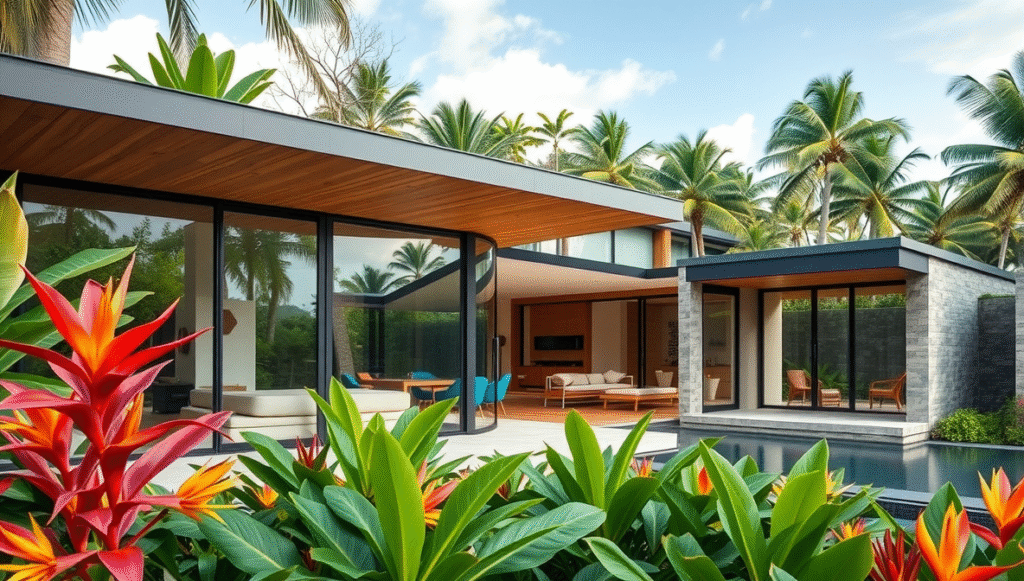
Embracing Brazilian tropical modern house design means shaping your home around climate, context, and lifestyle. With smart orientation, thoughtful materials, open layouts, and strong links to nature, you can create a space that feels luxurious, sustainable, and timeless. Start with your site, integrate outdoor living, and bring warmth through natural materials.
Call to Action: Ready to design your tropical-modern dream home? Begin by consulting an architect familiar with this style, prepare your layout, and use this guide to create a sustainable, elegant home inspired by Brazil’s modern tropical beauty.
FAQs
Q1: What climate zones suit Brazilian tropical modern house design best?
A: It works best in warm, humid, and tropical regions but can be adapted to subtropical climates with insulation and heating adjustments.
Q2: Are tropical modern houses expensive to build?
A: They may cost more due to premium materials and custom design, but local resources and efficient construction can keep budgets under control.
Q3: What maintenance does this style require?
A: Regular wood treatment, rust prevention for metal, and protection for concrete finishes are recommended for durability.
Q4: Can this design work for small urban plots?
A: Yes, by using vertical layouts, green walls, and open terraces, even compact sites can achieve a tropical modern feel.
Q5: What should be avoided when building this type of house?
A: Avoid neglecting ventilation, overusing glass without shading, or choosing materials that don’t suit humid conditions.