
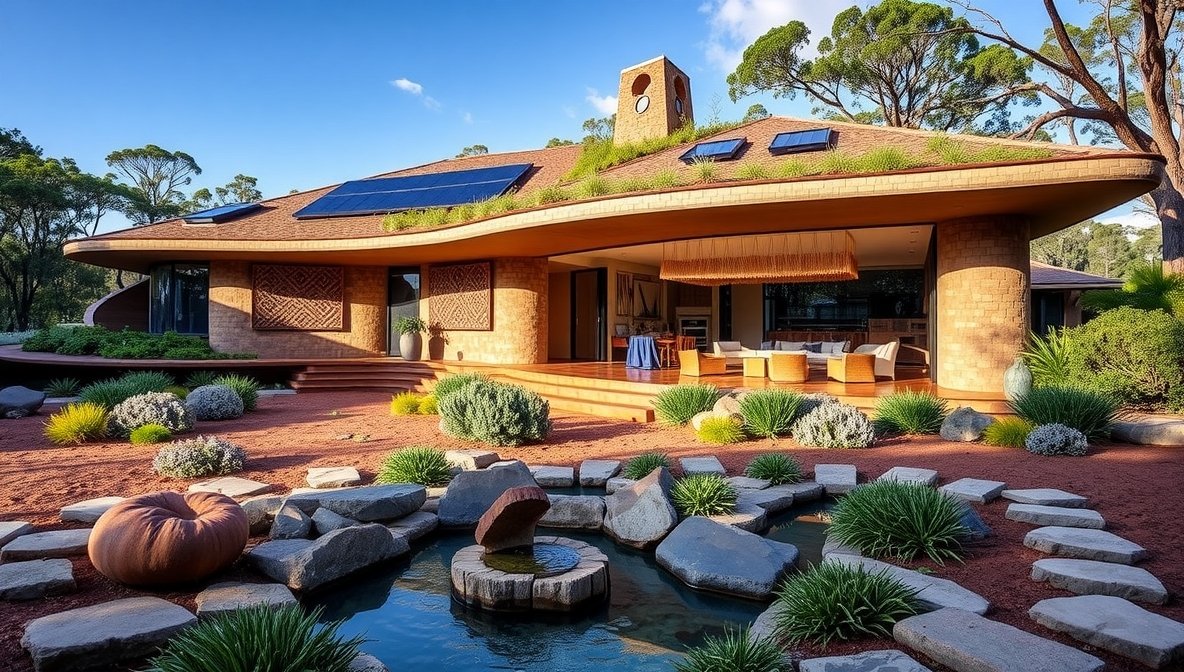
Australian Aboriginal Eco-House Architecture blends timeless cultural traditions with innovative sustainable design. This unique approach to living harmonizes people, land, and climate. By embracing ancient Aboriginal principles, modern architects create eco-houses that not only protect the environment but also promote community well-being and energy efficiency.
Understanding Australian Aboriginal Eco-House Architecture
Australian Aboriginal eco-house architecture is deeply rooted in respect for nature and land. Aboriginal people designed shelters suited to local climates, using materials like bark, wood, and grass. These designs evolved through deep environmental knowledge and spiritual connection to the land. Today, architects adapt these principles to modern homes using renewable materials and green technologies.
Eco-houses inspired by Aboriginal design emphasize balance between humans and the ecosystem. They use passive design strategies that reduce energy consumption. Through natural ventilation, thermal mass, and locally sourced materials, these structures maintain comfortable temperatures year-round while minimizing environmental impact.
The Philosophy Behind Aboriginal Eco-Architecture
At the heart of Aboriginal architecture lies the principle of “Country.” It refers to the spiritual, physical, and cultural connection between people and land. Every design decision in eco-houses respects this relationship. Spaces are created to blend with the natural surroundings, not to dominate them.
Moreover, Aboriginal eco-houses are not just shelters—they represent a way of life. They focus on simplicity, community, and sustainability. These values encourage residents to live in harmony with nature and reduce their carbon footprint without sacrificing comfort or style.
Sustainable Materials and Construction Techniques
Modern Aboriginal-inspired eco-houses use natural and renewable materials. Builders often select locally available resources like rammed earth, timber, bamboo, and stone. This reduces transportation emissions and supports local industries. The use of recycled and reclaimed materials further enhances sustainability.
In addition, many eco-houses feature solar panels, rainwater collection systems, and natural insulation. By combining ancient construction wisdom with modern technology, these homes achieve energy efficiency and minimize waste generation.
Climate-Responsive Design Features
One of the strengths of Aboriginal eco-house architecture is its climate responsiveness. Aboriginal communities have long understood how to design homes suited to Australia’s diverse climates. In hot regions, wide eaves, open layouts, and shading elements encourage airflow. In cooler areas, thick walls and insulated roofing retain heat efficiently.
These principles guide modern architects to design homes that reduce reliance on artificial heating and cooling systems. As a result, residents enjoy lower energy bills while living comfortably throughout the year.
Integration of Traditional Knowledge and Modern Innovation
Aboriginal architectural principles merge beautifully with modern green building technologies. Architects use advanced modeling tools to analyze sunlight, wind, and temperature patterns. This helps optimize house orientation and design for maximum efficiency.
By combining ancient wisdom with innovation, eco-house projects demonstrate how cultural preservation and environmental progress can coexist. This integration also honors Aboriginal heritage while setting a sustainable example for future construction practices.
Community-Centered Living Spaces
Aboriginal eco-house architecture values community living. Traditional settlements were designed around gathering areas, promoting connection and cooperation. Modern eco-house designs often incorporate shared gardens, open courtyards, and multi-functional communal spaces.
Such features strengthen social bonds and encourage shared responsibility for sustainable living. People work together to grow food, collect water, and maintain energy systems, creating resilient and supportive communities.
Energy Efficiency and Environmental Impact
Energy efficiency stands at the core of Aboriginal eco-house architecture. Passive solar design, natural lighting, and renewable energy systems reduce dependence on fossil fuels. Additionally, smart energy management tools help monitor and optimize energy use.
The reduction in environmental impact is significant. These eco-houses emit less carbon, consume fewer resources, and promote biodiversity. By reducing ecological footprints, they embody the essence of sustainable living.
Cultural Significance in Modern Context
Aboriginal eco-house architecture goes beyond physical design—it carries cultural depth. Each structure tells a story about land, ancestry, and coexistence. Modern architects incorporate symbols, art, and spatial patterns inspired by Aboriginal traditions, ensuring cultural continuity.
This cultural integration strengthens identity and pride among Aboriginal communities. It also educates others about the importance of respecting traditional ecological knowledge in modern society.
Economic and Social Benefits
Building eco-houses inspired by Aboriginal architecture also brings economic advantages. Energy-efficient homes reduce long-term utility costs. Local material sourcing supports regional economies and job creation.
Socially, these homes enhance health and well-being. Natural materials improve air quality, while connection to nature fosters mental peace. Furthermore, the emphasis on community living reduces isolation and promotes mutual care.
Challenges and Future Opportunities
While Aboriginal eco-house architecture offers immense benefits, it faces challenges such as higher initial construction costs and limited awareness. However, as sustainability becomes a global priority, demand for such designs is growing.
Governments, architects, and communities are collaborating to make eco-houses more accessible. Future advancements in green technologies will continue to refine these sustainable structures, blending cultural integrity with modern efficiency.
How Aboriginal Eco-Houses Influence Global Architecture
The principles of Australian Aboriginal eco-house architecture are inspiring architects worldwide. Countries facing climate change and urbanization challenges look toward Aboriginal models for guidance. By applying lessons of land respect, natural design, and renewable materials, global builders can create homes that are both functional and ethical.
This global influence proves that ancient Aboriginal wisdom holds the key to a sustainable architectural future. The fusion of culture and sustainability offers a blueprint for responsible urban development.
Conclusion:
Australian Aboriginal eco-house architecture stands as a beacon of harmony between people and the planet. It reminds us that sustainable living is not new—it’s deeply rooted in Indigenous wisdom. By learning from Aboriginal traditions and applying them to modern design, we can build homes that protect both culture and climate.
FAQs
1. What is Australian Aboriginal eco-house architecture?
It’s a sustainable building approach inspired by Aboriginal traditions, emphasizing natural materials, energy efficiency, and harmony with the environment.
2. Why is Aboriginal architecture important today?
It teaches how to live sustainably by respecting nature and using environmentally friendly resources while maintaining cultural identity.
3. What materials are used in Aboriginal eco-houses?
Common materials include rammed earth, timber, bamboo, stone, and recycled elements—all locally sourced and eco-friendly.
4. How do these houses save energy?
They use passive solar design, natural ventilation, and renewable energy systems like solar panels and rainwater harvesting.
5. Can modern cities use Aboriginal eco-designs?
Yes, architects can adapt these designs for urban areas to create energy-efficient, culturally inspired, and environmentally responsible homes.