
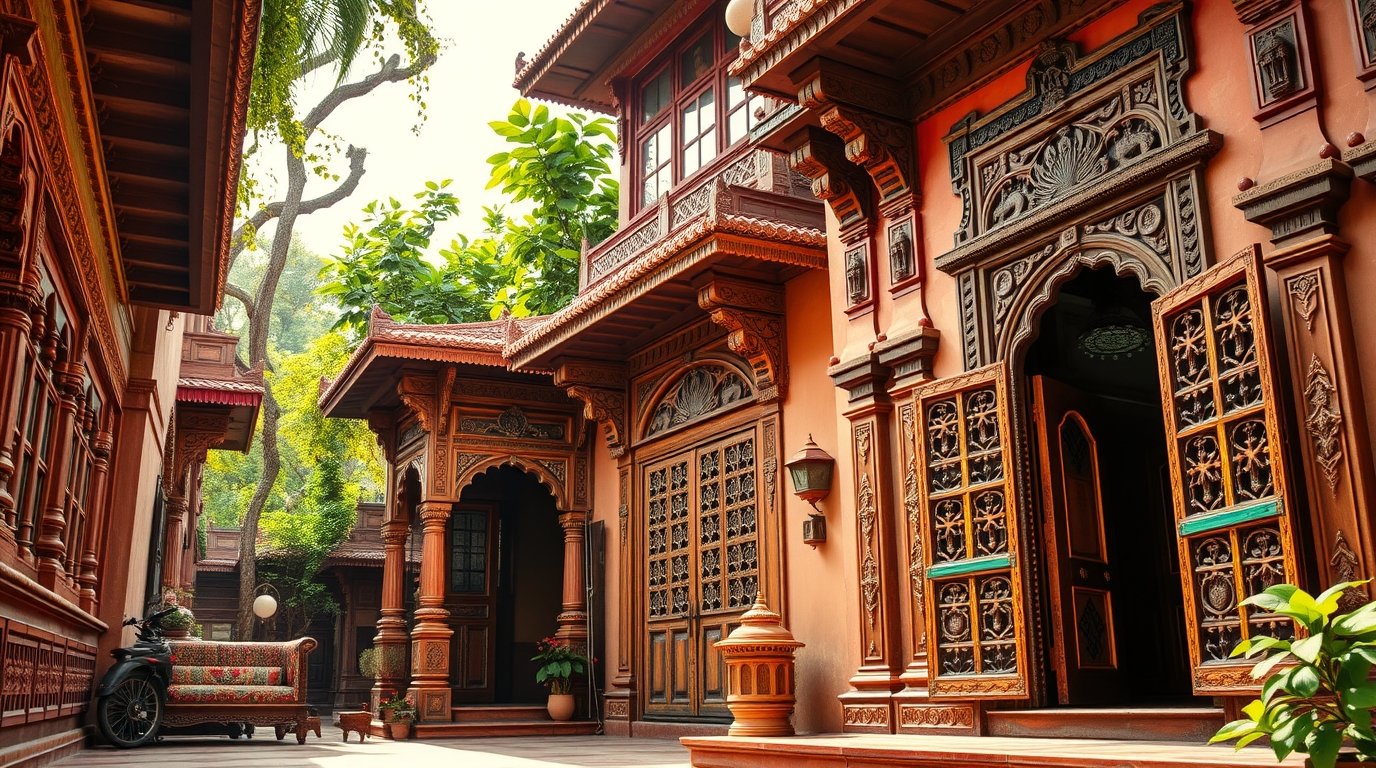
Indian Traditional Home Architecture is a living reflection of India’s cultural depth, climate diversity, and artistic brilliance. From the earthy courtyards of Rajasthan to the serene wooden houses of Kerala, every region showcases a distinct architectural style that connects nature, spirituality, and daily living. Crafted with precision and purpose, these homes tell timeless stories of tradition, balance, and sustainability.
Designed to harmonize with the environment, traditional Indian homes prioritize natural ventilation, light, and materials. Rather than following modern construction trends, they focus on energy efficiency, emotional warmth, and social interaction. Let’s explore the history, design principles, and unique regional variations that define Indian traditional home architecture and make it relevant even in today’s modern world.
Historical Roots of Indian Traditional Home Architecture
Rooted in ancient Vastu Shastra principles, Indian traditional home architecture emerged as a science of harmonious living. Developed thousands of years ago, it combines spatial geometry, sunlight direction, and cosmic energy. As centuries passed, diverse dynasties, climates, and local customs shaped distinct regional styles while maintaining spiritual balance.
Architectural techniques evolved through observation and experience. Builders understood soil types, rainfall patterns, and seasonal changes. Consequently, homes became functional yet artistic. This knowledge passed down generations, preserving India’s architectural wisdom while ensuring homes remained culturally connected and environmentally sound.
Key Features of Indian Traditional Home Architecture
Indian homes traditionally reflect a deep bond between man and nature. Materials like clay, lime, bamboo, and stone are locally sourced, reducing environmental impact. Each element—from doors to courtyards—serves both aesthetic and practical purposes.
High ceilings allow air circulation, while thick walls maintain indoor coolness. Verandas provide shade, and central courtyards act as social and spiritual hubs. Moreover, intricate carvings, motifs, and symmetrical layouts highlight craftsmanship and balance, which are core values of Indian traditional home architecture.
Regional Styles Across India
Rajasthani Havelis
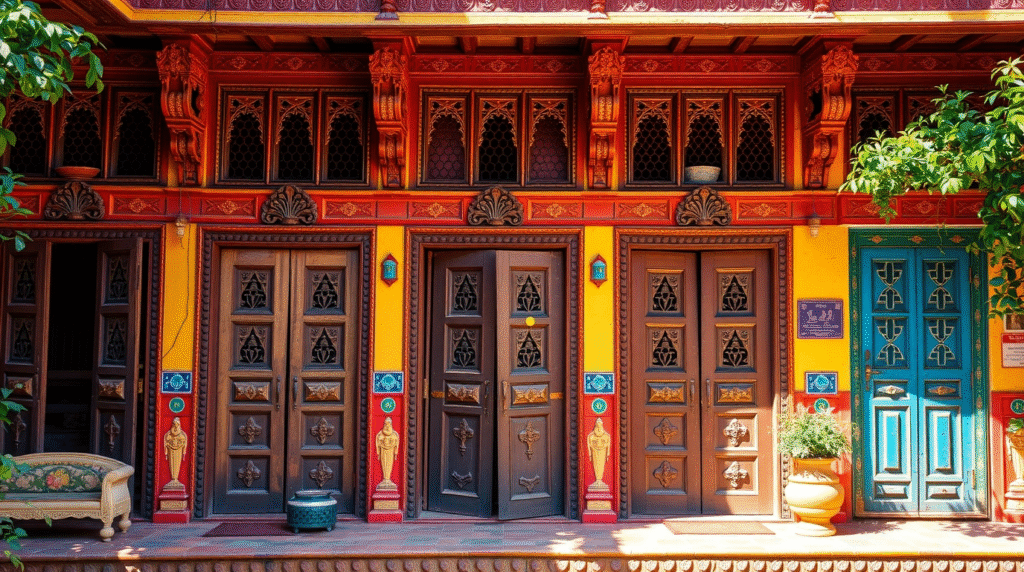
Built for desert climates, Rajasthani havelis use sandstone and lime plaster. Jharokhas (overhanging balconies) and jaalis (latticed screens) filter sunlight and allow breeze flow. The grand courtyards enhance ventilation and serve as family gathering spaces.
Kerala Nalukettu Homes
In contrast, Kerala’s humid environment led to sloping roofs and wooden pillars. The “Nalukettu” house design includes a central courtyard surrounded by rooms, allowing rainwater collection and natural cooling. Traditional tiled roofs add charm and durability.
Tamil Nadu Chettinad Mansions
Chettinad homes blend elegance and strength. Made with lime, egg white plaster, and Burmese teak, these mansions exhibit artistic flooring and vast courtyards. Their symmetry and grand entrances symbolize prosperity and hospitality.
Vastu Shastra and Architectural Harmony
Vastu Shastra guides the placement of rooms, doors, and windows to balance energies. North and east-facing homes are preferred for sunlight and spiritual alignment. The kitchen faces southeast, while the puja (prayer) room often faces northeast.
These principles not only bring aesthetic order but also psychological comfort. Many modern architects reinterpret Indian traditional home architecture by integrating Vastu elements into contemporary spaces, maintaining ancient wisdom within modern lifestyles.
Sustainable Design Principles in Indian Homes
Sustainability lies at the heart of traditional Indian homes. Builders relied on natural materials and passive cooling techniques long before modern green architecture emerged. Thick mud walls, shaded verandas, and reflective lime coatings kept homes cool even in extreme heat.
Rainwater harvesting, courtyard ventilation, and sun-facing layouts minimized energy use. This eco-conscious approach ensured durability, comfort, and harmony with the surroundings, proving that traditional Indian designs were centuries ahead of their time.
Art, Culture, and Symbolism in Architecture
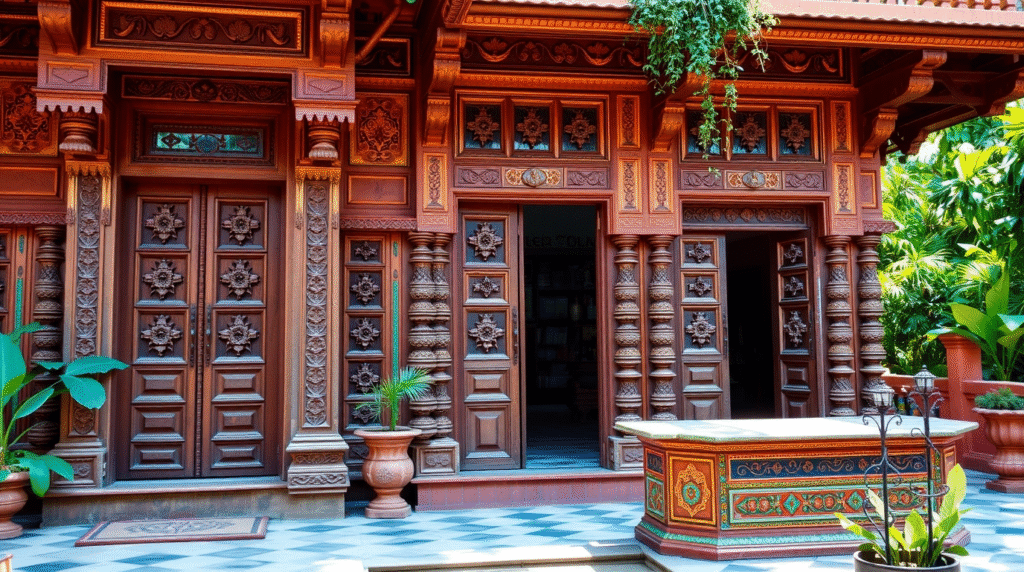
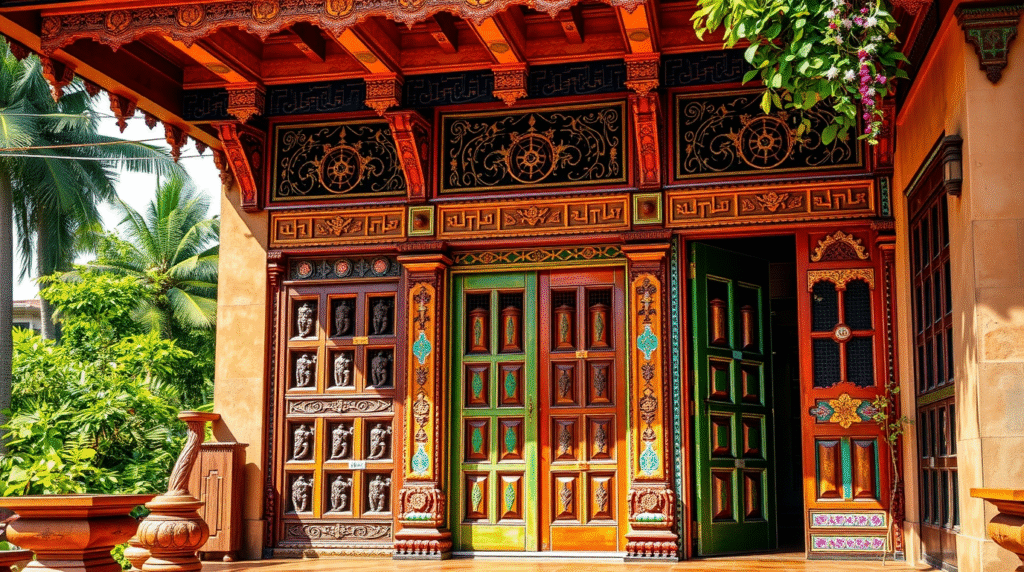
Indian homes are not just physical structures—they’re expressions of art and belief. Carved wooden doors depict mythological tales. Wall paintings reflect family heritage. Rangoli at entrances welcomes guests with color and positivity.
Moreover, temples within homes represent devotion, while decorative arches and pillars symbolize strength and grace. Every element—from design to decoration—blends function with philosophy, making Indian traditional home architecture both beautiful and meaningful.
Role of Courtyards in Traditional Homes
Courtyards, or “aangan,” are the soul of Indian houses. Acting as natural ventilators, they distribute light and air evenly across rooms. Families gather here for prayer, celebration, and conversation. Children play safely, and elders rest in peace under open skies.
This central design feature enhances social bonding while maintaining privacy. In today’s fast-paced urban life, courtyard-inspired homes revive a sense of calm and community, keeping the timeless essence of traditional Indian architecture alive.
Materials Used in Traditional Home Architecture
Traditional Indian builders used locally available, natural materials. Mud walls provided insulation, while stone offered strength. Wooden beams supported roofs and added elegance. Lime plaster resisted heat, and clay tiles prevented leaks during monsoons.
These materials aged gracefully, reducing waste and maintenance. Their adaptability to weather made homes long-lasting and comfortable. By combining regional resources with smart design, ancient builders achieved sustainability effortlessly.
Modern Adaptations of Indian Traditional Homes
Today, architects blend tradition with innovation. Courtyards become skylit atriums, and wooden facades meet glass walls. While designs evolve, the essence remains—connection with nature, light, and harmony.
Builders now use modern technology to replicate traditional patterns using sustainable alternatives. Consequently, Indian traditional home architecture continues to inspire eco-friendly and emotionally enriching homes worldwide.
Why Indian Traditional Architecture Still Matters
Despite modern trends, traditional architecture remains relevant. It promotes well-being, conserves energy, and supports cultural identity. With growing global focus on sustainability, Indian design wisdom offers real solutions to climate challenges.
By revisiting heritage architecture, homeowners and designers can rediscover comfort, balance, and sustainability—all deeply rooted in India’s timeless traditions.
Conclusion
Indian traditional home architecture is more than an art form—it’s a philosophy of living in harmony with nature and culture. Every brick, beam, and carving reflects values of sustainability, beauty, and family unity.
Embracing these principles in modern construction not only preserves history but also creates healthier, happier homes. Explore the magic of India’s architectural heritage and bring timeless wisdom into your living space today.
FAQs
Q1. What makes Indian traditional home architecture unique?
It combines local materials, climate-based designs, and cultural symbolism to create sustainable, comfortable, and meaningful homes.
Q2. How does Vastu Shastra influence Indian home design?
Vastu Shastra ensures harmony by aligning homes with natural energy flows, improving health, prosperity, and peace.
Q3. Which materials are commonly used in traditional Indian homes?
Materials like mud, lime, stone, bamboo, and teak wood are frequently used for strength, insulation, and eco-friendliness.
Q4. Are traditional architectural principles suitable for modern homes?
Yes, modern homes can integrate courtyards, natural lighting, and eco-friendly materials inspired by traditional designs.
Q5. How can homeowners incorporate traditional styles today?
By using local materials, adding carved wood details, and adopting courtyard layouts, one can blend heritage with modern comfort.